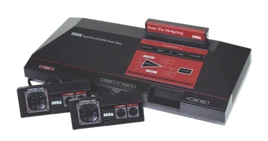


Martial Arts on 8-Bit Hardware: The Hidden Identity of a Cult Master System Release
Black Belt (Taiwan) (En) (Unl) is one of those enigmatic Master System Mark III-era releases that blurs the line between official localization, regional cartridge variants, and the sprawling world of unlicensed 8-bit software. Often overshadowed by its more widely distributed Western counterpart, this version represents a fascinating artifact of how arcade-style martial arts games were adapted and redistributed across Asian markets during the late 1980s and early 1990s under the shadow of Sega hardware dominance.
What makes this release especially intriguing is not just its gameplay, but its fragmented identity: different labelings, regional dumps, and cartridge revisions have led to confusion in preservation circles, where it is frequently cataloged as an “unlicensed” variant. Yet beneath that ambiguity lies a technically competent and historically important side-scrolling fighter that helped define early console beat ’em up design.
Black Belt (Taiwan) (En) (Unl): A Martial Arts Blueprint on Master System Mark III
The Master System adaptation of Black Belt traces its lineage back to Sega’s arcade-inspired philosophy, where martial arts action was distilled into side-scrolling combat encounters with simplified but readable mechanics. While originally inspired by earlier Japanese releases such as Kenseiden, this Taiwanese-marketed variant stands out due to its distribution path and subtle gameplay tuning differences.
Unlike later, more elaborate fighting games, this title focuses on clarity over complexity. Each enemy encounter is a tightly controlled duel of timing, positioning, and reaction speed. The design philosophy prioritizes readable attack patterns, making it accessible while still punishing mistakes with precision hit detection.
Structured Combat and Predictable Chaos
Players control a lone martial artist navigating horizontally scrolling environments filled with enemy waves. Combat is built around a limited but effective moveset: punches, kicks, crouching strikes, and occasional projectile interactions depending on enemy type.
The challenge comes not from move variety, but from spacing and timing. Enemies often attack in staggered formations, forcing players to manage multiple threats while maintaining positional advantage. This creates a rhythm-based combat loop that feels closer to tactical choreography than button-mashing action.
Technical Execution in Black Belt (Taiwan) (En) (Unl) on 8-Bit Hardware
From a technical perspective, this Master System Mark III release demonstrates how far developers could push 8-bit architecture under tight memory constraints. The Video Display Processor (VDP) is leveraged to render layered backgrounds and animated character sprites with minimal slowdown, though occasional sprite flickering appears when too many enemies occupy a single scanline.
Color usage is particularly efficient. The palette is limited, but carefully chosen to maintain contrast between player character, enemies, and environmental hazards. This ensures readability even during high-intensity combat sequences where multiple sprites overlap.
Audio design relies on the SN76489 PSG chip, producing sharp, percussive hits for combat feedback. Each strike is accompanied by distinct tonal cues, reinforcing player timing without requiring visual confirmation alone.
Animation Constraints and Frame Buffer Ingenuity
Character animations are intentionally minimal but effective. Limited frame cycling is used to simulate motion fluidity, while hit reactions are exaggerated to communicate combat impact. This is essential in a game where input lag tolerance must remain extremely low for precise defensive timing.
The frame buffer management ensures that scrolling remains stable even when multiple enemies enter the screen, a notable achievement given the hardware’s limited VRAM bandwidth.
Emulation and Preservation of Black Belt (Taiwan) (En) (Unl)
Today, preserving and playing this version of Black Belt on modern hardware requires careful emulator configuration to maintain accurate timing and collision detection. Because this title exists in multiple regional dumps, selecting the correct ROM variant is crucial for consistent behavior.
Recommended emulator setups include SMS Plus GX via RetroArch or Emulicious, both of which provide strong cycle-accurate behavior for Master System Mark III software.
Optimal settings include:
- Enable BIOS mode instead of HLE to preserve authentic boot behavior
- Disable frame skipping to maintain correct enemy attack timing
- Activate VSync to prevent audio desynchronization during combat transitions
- Use integer scaling or CRT shaders for authentic pixel density
On devices like the Steam Deck or Android handhelds (Odin-class systems), the game benefits significantly from upscaling. At 4K output with CRT Royale shaders, sprite edges become crisp while preserving scanline authenticity, making enemy telegraphs easier to read than on original hardware.
A common emulation issue involves hitbox desynchronization, often caused by incorrect region settings or inaccurate CPU timing. Adjusting the core to “accurate” rather than “balanced” mode typically resolves this.
Legacy of Black Belt in the Master System Ecosystem
While not as globally recognized as other Sega martial arts titles, this Taiwanese variant of Black Belt holds a unique place in preservation communities. It represents the fragmented distribution landscape of 8-bit gaming, where regional differences could significantly alter a game’s identity and accessibility.
Its combat system influenced later simplified beat ’em ups that prioritized timing and spacing over complex combo systems. This design lineage can be traced forward into early handheld fighters and even some indie action platformers that emphasize deliberate enemy patterns.
Speedrunning communities occasionally revisit this title due to its deterministic enemy behavior, where optimized movement routes and damage manipulation can drastically reduce completion times. While niche, it remains a respected entry in Master System challenge runs.
Frequently Asked Questions (FAQ)
Is Black Belt (Taiwan) (En) (Unl) an official Sega release?
No. It is considered an unlicensed or regionally redistributed variant of the Master System martial arts title, often circulated in Taiwanese and Asian markets.
How does this version differ from other Black Belt releases?
Differences typically include minor gameplay timing adjustments, regional text changes, and cartridge-level variations that affect compatibility and boot behavior.
What is the best way to emulate this game today?
Use Emulicious or RetroArch with SMS Plus GX, enable accurate timing, disable frame skipping, and ensure correct region configuration for stable gameplay.
Why does the game show sprite flickering during combat?
This is a hardware limitation of the Master System VDP when too many sprites overlap on a single scanline. It is authentic behavior rather than an emulation flaw.


