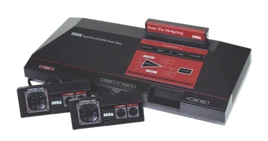

When Homebrew Meets Excellence: The Story of BOoM on Sega Master System
In the modern era of retro gaming, few things are more exciting than discovering a brand-new game designed for decades-old hardware. BOoM (World) (v1.1) (Aftermarket) (Unl) is exactly that kind of experience: a polished aftermarket release that showcases the enduring potential of the Sega Master System. Created by passionate developers long after Sega ended official support for the platform, BOoM demonstrates how the homebrew scene has evolved from simple technical experiments into a legitimate source of high-quality software for classic consoles.
For collectors, preservationists, and players who continue to celebrate the Master System Mark III, BOoM represents something remarkable. It is not merely a nostalgic throwback but a modern game built with a deep understanding of 8-bit hardware limitations and strengths. The result is an experience that feels authentic to the Master System while benefiting from decades of design knowledge.
As one of the standout releases in the contemporary Master System homebrew community, BOoM has earned a reputation for quality, challenge, and technical craftsmanship.
BOoM (World) (v1.1) (Aftermarket) (Unl): A New Chapter for Classic Hardware
The Master System enjoyed a unique lifespan compared to many of its competitors. While official development ended years ago, dedicated programmers, artists, and enthusiasts never stopped creating software for the platform. BOoM emerged from this thriving aftermarket ecosystem as an example of what modern development techniques can achieve on vintage hardware.
Version 1.1 refined and expanded upon the original release, addressing minor issues while further polishing gameplay and presentation. For many players, this revision became the preferred way to experience the game.
The significance of BOoM extends beyond its gameplay. It serves as proof that the Master System remains a living platform, capable of receiving meaningful new releases even decades after its commercial lifespan ended.
Mastering the Blast Zone: Gameplay and Mechanics
Fast Action with Old-School Discipline
BOoM embraces a straightforward design philosophy: simple mechanics, demanding execution, and rewarding mastery. While the core gameplay is immediately accessible, the challenge gradually escalates through increasingly complex stage layouts and enemy encounters.
Players must balance movement, timing, and situational awareness while navigating carefully designed environments filled with hazards and opposition.
- Precise movement controls: Every input matters.
- Pattern recognition: Learn enemy behavior for survival.
- Risk-versus-reward decisions: Aggressive play can yield greater rewards.
- Progressive difficulty: New mechanics emerge naturally.
- Replay-focused design: Encourages repeated attempts and optimization.
The game's responsiveness is one of its strongest qualities. Movement feels immediate, allowing skilled players to execute precise maneuvers with confidence.
Level Design That Rewards Observation
Rather than relying on cheap difficulty spikes, BOoM builds challenge through intelligent level construction. Early stages introduce concepts individually before later levels combine them into more demanding scenarios.
This creates a satisfying learning curve where every mistake becomes a lesson. Players gradually develop the skills needed to overcome tougher encounters, making victories feel genuinely earned.
The game rewards experimentation and mastery, encouraging players to revisit stages in search of faster completion times and higher scores.
Pushing the Master System Further Than Expected
Visual Design Built Around Clarity
One of the first things players notice about BOoM is its clean visual presentation. The developers clearly understood the importance of readability, especially during intense gameplay sequences.
Sprites are well-defined, environments are colorful without becoming cluttered, and animations remain smooth throughout most situations. Careful optimization minimizes sprite flickering, even during scenes featuring multiple active objects.
The game's art direction embraces classic Master System aesthetics while demonstrating a level of polish typically associated with late-generation commercial releases.
Excellent Audio on Limited Hardware
The Master System's PSG audio hardware has often been underestimated, but BOoM makes impressive use of it. The soundtrack features energetic compositions that reinforce gameplay intensity without becoming repetitive.
Sound effects provide clear feedback for player actions and environmental interactions. This responsiveness helps maintain immersion while supporting the game's precise control scheme.
The combination of effective audio design and minimal input lag results in a remarkably satisfying gameplay experience.
Modern Development on Vintage Technology
Perhaps BOoM's greatest technical achievement is how efficiently it uses available resources. Memory management, sprite handling, and screen updates are all executed with impressive precision.
The game serves as an educational example of how modern developers can continue discovering new techniques for hardware introduced more than three decades ago.
Playing BOoM Today: Emulation and Modern Enhancements
One of the advantages of contemporary homebrew releases is their excellent compatibility with modern emulation software. BOoM runs flawlessly across a wide range of devices and platforms.
Recommended Emulator Setup
- Genesis Plus GX: Outstanding compatibility and accuracy.
- Mesen: Excellent debugging tools and performance.
- RetroArch: Flexible frontend supporting multiple Master System cores.
- Ares: High-accuracy preservation-focused emulation.
For the best experience, configure:
- Integer scaling enabled.
- Original aspect ratio preserved.
- Run-ahead latency reduction activated.
- CRT shaders for authentic visual presentation.
- V-Sync enabled to eliminate tearing.
4K Upscaling, Steam Deck, and Odin Performance
BOoM benefits significantly from modern display technology. Upscaled to 4K using nearest-neighbor scaling, the game's pixel artwork remains crisp and detailed. Players who prefer authenticity can apply CRT filters to recreate the appearance of a vintage television.
The title performs exceptionally well on handheld devices such as the Steam Deck, Odin 2, Retroid Pocket 5, and ASUS ROG Ally. Thanks to the game's modest hardware requirements, performance remains flawless even on lower-powered emulation devices.
Save states are particularly useful for practicing difficult sections, while fast-forward functionality allows players to experiment with strategies more efficiently.
If graphical issues occur, verify that your emulator is running in Master System mode and that you are using an updated emulator core.
A Lasting Impact on the Homebrew Scene
While BOoM may not possess the commercial history of Sega classics such as Alex Kidd or Phantasy Star, its influence within the retro-development community is significant. It stands as a showcase of what modern homebrew creators can accomplish when combining passion with technical expertise.
The game's release helped reinforce the idea that retro hardware remains a viable platform for original software. It has become a frequently cited example when discussing high-quality Master System homebrew projects.
Collectors seek physical editions, preservationists document its development, and competitive players continue exploring faster routes and scoring techniques. A small but dedicated speedrunning community has emerged around the game, further extending its lifespan.
For many enthusiasts, BOoM represents the future of retro gaming: preserving the past while continuing to create something new.
Frequently Asked Questions About BOoM
What is the best version of BOoM to play today?
Version 1.1 is generally considered the definitive release because it includes refinements and improvements over the original v1.0 edition.
Can BOoM be played on the Steam Deck?
Absolutely. Through RetroArch, EmuDeck, Genesis Plus GX, or Mesen, the game runs flawlessly with responsive controls and excellent performance.
How do I fix graphical glitches in BOoM?
Most issues stem from incorrect emulator configuration. Use updated emulator cores, verify Master System compatibility settings, and ensure proper region detection.
Does BOoM have a speedrunning community?
Yes. The game's precise controls, optimized level design, and replay-focused structure have attracted players interested in speedrunning and score attacks.
More than a simple aftermarket curiosity, BOoM is a testament to the enduring appeal of Sega's 8-bit hardware. It proves that innovation does not require cutting-edge technology—only talented developers, passionate communities, and a platform worth preserving. For anyone interested in the modern Master System scene, BOoM remains one of the most impressive homebrew releases available today.


